Construction Defect
Bad Construction
Causes Real
Damage. You Have
Real Remedies.
Construction defect claims are different from every other claim type on this site. The dispute is not always with your insurer. It may be with the builder, the general contractor, the subcontractor, or the design professional whose work failed.
Florida law gives you specific legal remedies against each of them directly. Those remedies exist alongside any insurance claim you may have and are subject to deadlines that can extinguish your rights if missed. You do not need a denial to call.
WHY CONSTRUCTION DEFECT CLAIMS ARE DIFFERENT
This is not just an insurance dispute. It is a legal claim against the people whose work failed.
When a contractor, builder, subcontractor, or design professional produces work that fails to meet the required standard and that failure causes property damage, the property owner has legal remedies under Florida's construction defect statutes, remedies that exist independently of any insurance claim and that run directly against the responsible party.
Florida Chapter 558 governs the pre-suit process for construction defect claims. Before litigation can be filed, the property owner must serve a written notice of claim on the contractor detailing the alleged defects. The contractor then has a statutory period to inspect, respond, and either offer to repair, offer monetary compensation, or deny responsibility. That pre-suit process is not optional and missing its deadlines or handling it incorrectly can significantly weaken the legal position that follows.
In many construction defect cases an insurance claim also exists alongside the contractor claim. Defective work that caused water intrusion, structural damage, or other covered property damage during the policy period may be recoverable under the property policy in addition to or separately from the contractor dispute. I evaluate both paths from the first conversation.
"A construction defect is a legal claim against a specific party who produced defective work. Understanding who that party is and what process applies is where I start."
COMMON CONSTRUCTION DEFECT TYPES
- New Home Construction Defects
- New Condominium Construction
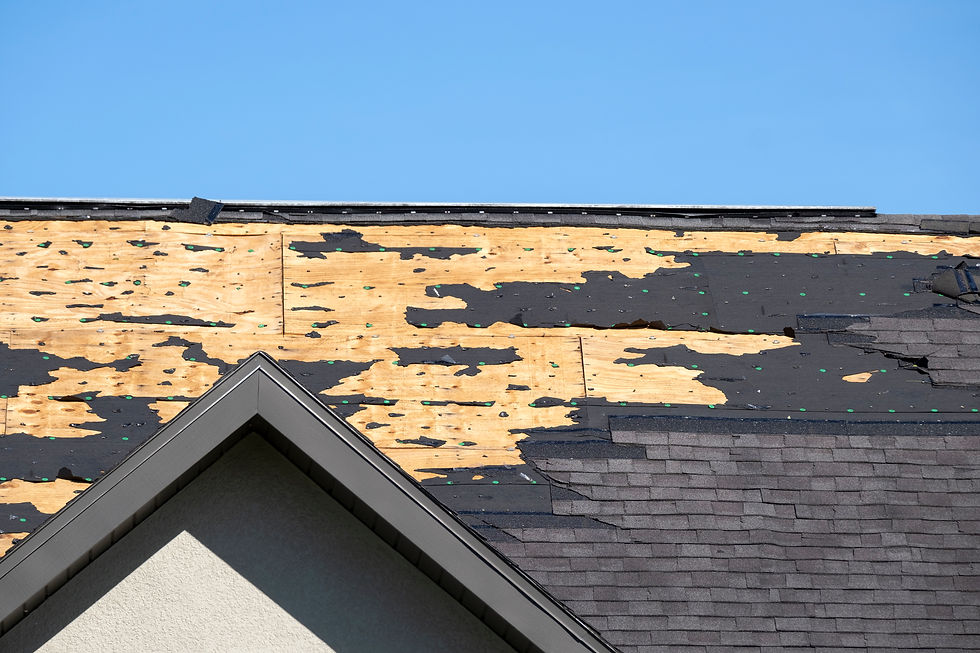
- Roof Installation Failures
- Foundation and Slab Issues
- Waterproofing Failures
- Building Envelope Failures
- HVAC Installation Failures
- Plumbing Installation Failures
- Structural Design Failures
- Renovation and Remodel Failures
- Draining and Grading Failures
- Stucco and Exterior Failures
This is not an exhaustive list. If defective construction or renovation work caused damages, it is worth a call.
AFTER A 558 NOTICE, THE CONTRACTOR HAS A CHOICE. SO DO YOU
The right to repair is an option. Not a resolution. And not the end of your rights.
After receiving a Chapter 558 notice of claim, the contractor has a statutory period to respond. That response will take one of two forms. They will offer to repair the defect themselves, or they will deny that a defect exists or that it caused the claimed damage. How you handle either response has significant consequences for what comes next.
The Right to Repair
A contractor who offers to repair after a 558 notice has not resolved the dispute. They have requested an opportunity to cure their own failure. That offer does not extinguish your legal rights. If the repair is performed improperly or fails to fully address the underlying defect, the inadequate repair itself becomes the foundation of the litigation that follows and in many ways a stronger foundation than the original defect alone. The risk in accepting a repair offer without legal involvement is not the loss of rights. It is proceeding without the documentation to prove the repair was inadequate and the possibility of agreeing to scope or access terms that benefit the contractor rather than you.
Denying Liability
A contractor who denies responsibility after receiving a 558 notice does not end the process. They open the door to litigation. At that point the strength of the documentation gathered during the pre-suit period, the quality of the expert opinions retained, and the precision of the 558 notice itself determine how strong your position is when the case proceeds to court. A denial received after a properly prepared 558 process is a significantly different starting point than a denial received after a notice that was incomplete or imprecise.
"The 558 process is not a formality. It is the foundation of the litigation that follows. How it is handled determines what options are available to you and how strong your position is when it matters."
WHAT TO EXPECT
The four most common ways wind claims get disputed.
01
Statute of Limitations and Repose
The contractor argues that the claim is time-barred under Florida's statute of limitations or statute of repose for construction defect claims, using the passage of time to eliminate liability regardless of the merits of the defect claim itself.
Response: Florida's construction defect statutes have specific limitation and repose periods that begin to run at different points depending on the type of defect, when it was discovered, and when the construction was completed. Determining whether a claim is time-barred requires a careful analysis and is frequently less clear-cut than the contractor's position suggests.
02
Chapter 558 Pre-Suit Procedure Disputes
The contractor challenges the adequacy of the 558 notice itself, arguing that the notice failed to describe the defects with sufficient specificity, was not served on all required parties, or did not comply with the procedural requirements of the statute.
Response: Chapter 558 notices must be carefully drafted to meet the statutory specificity requirements. A properly prepared notice that identifies the defects, their locations, and the resulting damage with precision is not vulnerable to procedural challenge. This is one of the primary reasons legal involvement before the notice is served is so important.
03
Causation Dispute
The contractor argues that the property damage was caused by owner maintenance failures, normal wear and tear, or conditions unrelated to the construction work, rather than by any defect in their workmanship or materials.
Response: Causation in construction defect cases requires expert analysis of the defect, the damage pattern, and the timeline of the failure. Engineers and forensic construction experts can establish the causal link between the defective work and the resulting damage and distinguish that damage from any unrelated conditions the contractor may point to.
04
Scope and Repair Cost Dispute
The contractor acknowledges some defect but disputes the scope of the required repair, arguing that a limited repair addressing only the visible defect is sufficient when in fact the defect caused damage extending well beyond what the contractor is prepared to acknowledge.
Response: The scope of repair in a construction defect claim must address not just the defect itself but all damage the defect caused. A roof installation failure that allowed water intrusion for an extended period does not require only a roof repair. It requires full remediation of the resulting water damage, mold, and structural compromise as well.
THE PROCESS
What happens when you call.
01
Free Case Review
I review your policy, the damage, and the insurer's position at no cost. You will know within the first conversation whether you have grounds to pursue more and what that process looks like.
02
I Build Your Case
I document the loss, retain the right experts, and build a legal strategy designed to counter whatever position the insurer has taken. You do not have to figure any of this out yourself.
03
Recovery
Through negotiation, appraisal, or litigation, I pursue every dollar your policy entitles you to. No fees unless I recover. No surprises. No fine print.
HAVE A DENIED OR UNDERPAID CLAIM? DON'T WAIT, DEADLINES APPLY.